
He noted that the primary responsibility of the Indian Army is to maintain operational readiness of the "highest order".

India Ratings expects long products demand growth to be sharp, supported by a demand push from the government-led infrastructure investments in affordable housing, railways, rural electrification and road networks.
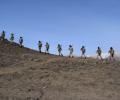
On May 5, around 250 Indian and Chinese army personnel clashed with iron rods, sticks, and even resorted to stone-pelting in Pangong Tso lake area in Eastern Ladakh.
"This is what this government did. Now, if you are feeding more than two and a half times the population of the United States and you are funding more than the population of the US and you're doing this pretty much anonymously and impersonally in the sense beyond the name and the detail, the bank account of the person. We're not asking anything more. There is no criteria of discrimination," Jaishankar, also a senior leader of the ruling Bharatiya Janata Party, said.

'If Indian armed forces entered Pakistan and succeeded in inflicting major damage on the Pakistani army and occupied territory in the Pakistani heartland, there is reason to think the Pakistani military would use some nuclear weapons against the incoming Indian forces to compel India to stop.'
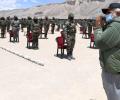
'...but from those who control the narrative.' Powerful nations have mastered this art of narrative building. Those nations who aspire to become global powers must do so, observes Shanthie Mariet D'Souza.
Johnson was to spend a few days in India starting April 26 as part of a planned itinerary, which is expected to include finalising a UK-India Enhanced Trade Partnership.
The Saudi and Iraq offer to replace Iranian crude supplies comes with a catch: Higher prices for the same quality of crude. The new government will face a tough decision over fuel price hike, says Aveek Sen.
'If there is one certainty in this visit, it is that Trump does not follow a script. He is unpredictable,' highlights Ambassador B S Prakash.

It is a timely reminder that when faced with twin threats, India has succeeded by wisely choosing allies, points out Colonel Anil A Athale (retd).

Seen as a major initiative, the 'strategic partnership model' aims to create a vibrant defence manufacturing ecosystem in the country through involvement of both the major Indian corporates as well as the MSME sector.

Indian Army's reported plan to set up think-tanks focussing on China has evoked mixed reactions among scholars in Beijing with some calling it a positive move and others saying it showed that Indian security forces have identified the PLA as a "real strategic rival".

He has Biden's ear and because of the past relationship, Biden will actually listen to him, unlike some past residents of Roosevelt House.

In spite of irritants and hiccups in the relationship, a few deliverables are expected of the prime minister's visit to China, says Rup Narayan Das.

Discover some of the winners of 2022 World Press Photo Contest.
'India will come increasingly in the US crosshairs if it insists on maintaining its strategic autonomy, warns Ambassador M K Bhadrakumar.

By 2030 India will be among top three countries in science and technology: PM

"Just a handful of Indian youth have joined the ISIS. Some have also returned after being persuaded by their families," asserted the home minister.

While FIIs have pumped in nearly Rs 17,000 crore, MFs have been net buyers to the tune of Rs 9,000 crore.

Situated at a height of 15,200 feet above sea level, the pass sits on the top of a craggily formed Himalayan range that separates the Tibetan plateau from the Indian sub-continent.

The Zee saga will see a long-drawn-out court battle before shareholders get any chance to vote on any proposal by the management or Invesco, says Prosenjit Datta.

The 58-page Republican manifesto released by the party after its formal approval said that Indian ancestry had made notable contributions to the US.

His exit has created a benchmark of sorts for how entrepreneurs and businesses should deal with debt crises. Unlike many other Indian businessmen, he hasn't fled, tried to hang on to the business by any means or wrangle out of the debt by using his closeness to the current government. It is so very rare for Indian media businesses to grow out of their founding family's shadow, however, benevolent it may be.
.jpg)
These are FM radio, uplinking news & current affairs, print media (news & current affairs), commodity exchanges, stock exchanges along with depositories and clearing corporation, power exchanges, petroleum & natural gas refining, insurance, defence production and private security agencies.

The Institute of Management Technology, Ghaziabad opens admissions to its PhD course for 2008.

'India has ramped up infrastructure on its side, so the Chinese military is finding Indian soldiers in locations where they are not used to seeing an Indian footprint,' points out Harsh V Pant.
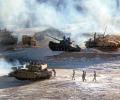
India's national security strategy needs to be revised periodically since the global and regional geopolitical situation is dynamic, points out Commodore Venugopal Menon (retd).

Salt-to-software conglomerate Tata group was among "multiple" entities who on Monday put in preliminary bids for buying the government's stake in loss-making carrier Air India.

'The US and India continue to use their deepening relationship to build new partnerships within and beyond the Indo-Pacific.'

Speaking after virtually launching COVID-19 testing facilities in Noida, Mumbai and Kolkata, Modi said that in the fight against coronavirus, India has come to a point where it does not lack in awareness, its scientific data is expanding and resources are also increasing.

The USS John Paul Jones acted like a dog marking the lamp post, observes Ambassador M K Bhadrakumar.

'Wherever in the world there is political instability, those countries are beset with severe crises today. But India is in a much better position than the rest of the world due to the decisions taken by my government in the national interest,' President Droupadi Murmu said in her address to both Houses of Parliament.
India's economy is slowing down due to domestic issues, says Sumit Ganguly.

At present, Wg Cdr Varthaman is serving at an IAF base in Rajasthan.

In the past, India strongly rejected references made to Jammu and Kashmir in a previous joint statement by Pakistan and China.

Against the backdrop of the standoff between Indian and Chinese troops in eastern Ladakh, the White House press secy said the United States was closely monitoring the current situation and supports its peaceful resolution.

At a time when China is trying to make its foray into South Asia, India should use its shared history to strengthen its ties in the region, says Dr Rup Narayan Das.

The MEA spokesperson further said the actions and behaviour of the Chinese side since earlier this year along the LAC have been in "clear violation" of the bilateral agreements and protocols concluded between the two countries to ensure peace and tranquility on the border.

The Border Security Force has been put on high alert along the India-Bangladesh border in Assam and Tripura following intelligence inputs of Islamic terrorists planning to infiltrate the country.

What makes Nagaraj's achievement significant is the fact that there have been only about 80 Intel Fellows globally in the 50 years of the company's operation.
